The Question
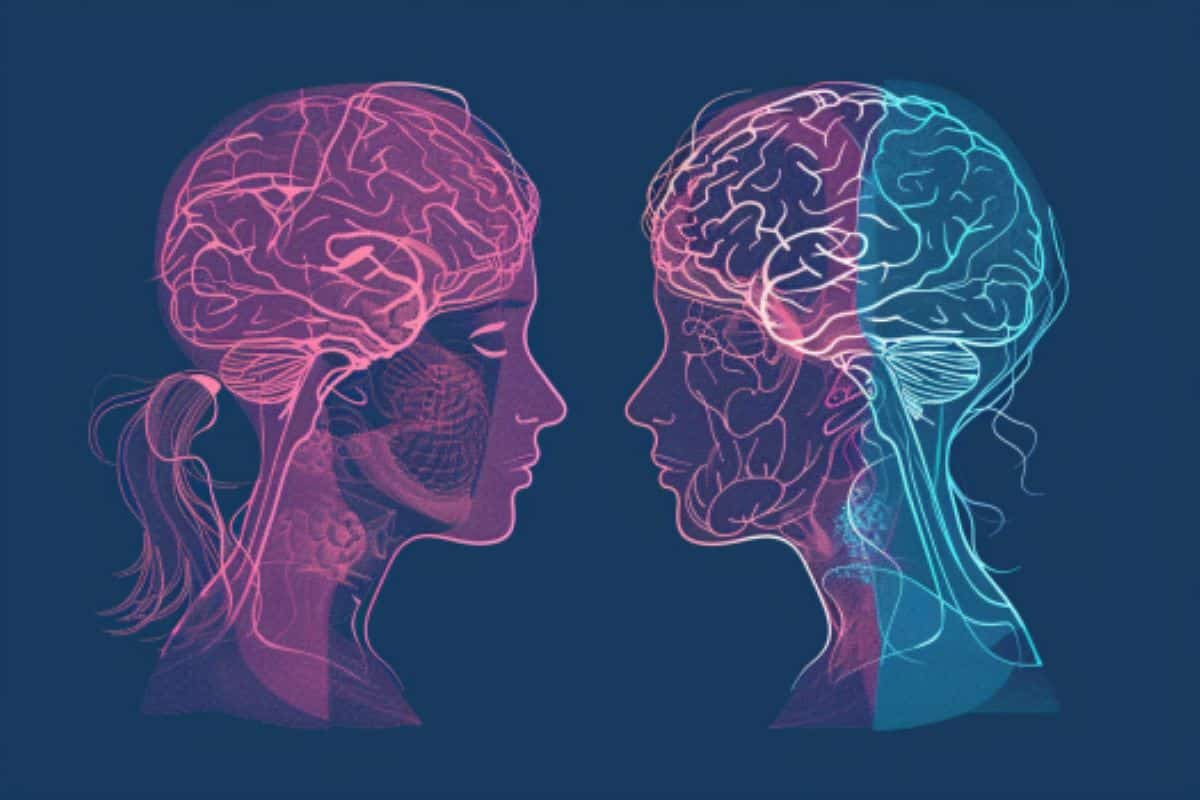
The question of whether male and female brains are organised differently has been scientifically contentious and culturally charged in roughly equal measure. A substantial body of research has claimed to find differences; another substantial body has questioned whether those differences are reliable, replicable, or meaningful. Ryali and colleagues (2024) approached the question with a methodological tool that previous research lacked: a spatiotemporal deep neural network trained on functional brain imaging data, capable of detecting patterns too subtle and complex for conventional analysis to reliably identify.
The Study
The research used functional MRI data from approximately 1,500 young adults aged 20 to 35, drawn from multiple independent cohorts and multiple sessions from the same individuals. The deep learning model was trained to distinguish male and female brains based on functional brain dynamics, and its performance was evaluated through cross-validation and replication across all three independent cohorts (Ryali et al., 2024). The use of multiple independent cohorts and multisession data is methodologically significant: it directly addresses the replication problem that has plagued previous research in this area, where findings in one sample have frequently failed to hold up in others.
Explainable AI techniques were then applied to identify which specific brain features were driving the model’s classifications, allowing the researchers to move beyond the black box of overall accuracy and identify where in the brain the distinguishing patterns were located (Ryali et al., 2024).
What They Found
The model distinguished male and female brains with consistently high accuracy, exceeding 90 percent cross-validation accuracy across sessions and independent cohorts (Ryali et al., 2024). This level of accuracy, replicated across multiple independent samples, represents a considerably stronger finding than most previous research in this area has produced.
The explainable AI analysis identified three networks whose functional dynamics showed the strongest and most consistent sex differences: the default mode network, the striatum, and the limbic network, all with effect sizes exceeding 1.5 (Ryali et al., 2024). These are not peripheral or obscure brain regions. The default mode network is centrally involved in self-referential thought, social cognition, and memory. The striatum plays a key role in reward processing, motivation, and learning. The limbic network is closely associated with emotional processing and regulation. The finding that sex differences are concentrated in these particular networks has direct relevance to understanding why rates and presentations of psychiatric and neurological conditions differ between males and females.
Importantly, the brain features identified by the explainable AI analysis also predicted sex-specific cognitive profiles, and this finding was independently replicated (Ryali et al., 2024). This means the differences the model detected are not merely statistical artefacts of the imaging data. They connect to real behavioural and cognitive differences, adding functional significance to what might otherwise be an interesting but abstract pattern recognition result.
What This Challenges
The authors note that their findings challenge the notion of a simple continuum in male and female brain organisation, a position that has gained traction in recent years partly as a corrective to oversimplified claims about binary brain differences (Ryali et al., 2024). The continuum model holds that male and female brains differ at most in degree along shared dimensions, with substantial overlap making categorical distinctions largely meaningless.
The present study does not deny overlap or claim that every male and female brain is categorically distinguishable. What it demonstrates is that functional brain dynamics contain reliable, replicable, and behaviourally relevant patterns that distinguish the two groups with high accuracy. These findings are more consistent with meaningful sex-based differences in functional organisation than the strong continuum position allows.
Why Replication Matters Here
The history of sex differences research in neuroscience is littered with findings that did not replicate. The design of this study, with its explicit focus on cross-cohort replication, multisession data, and independent verification of key findings, is a direct response to that history. The consistent results across three independent cohorts and multiple sessions provide considerably stronger grounds for confidence than single-sample studies, however large, can offer (Ryali et al., 2024).
Why It Matters
The practical implications extend beyond the scientific debate about brain organisation. If sex differences in functional brain dynamics are real, replicable, and behaviourally relevant, they have direct consequences for how psychiatric and neurological conditions are understood, diagnosed, and treated. Many conditions, including depression, anxiety, autism, and schizophrenia, show marked sex differences in prevalence, presentation, and treatment response. Research that identifies the specific neural systems where sex differences are most pronounced provides a foundation for developing more targeted, sex-specific diagnostic and therapeutic approaches (Ryali et al., 2024).
The use of deep learning and explainable AI also points toward a methodological shift in how this kind of research can be conducted. Previous studies relying on conventional statistical approaches may have lacked the sensitivity to detect distributed, dynamic patterns of difference that deep neural networks can identify. The tools, as much as the findings, represent a contribution to the field.
Excerpt
Do male and female brains differ in their functional organisation? A 2024 study using deep learning and data from 1,500 people finds they do, with over 90 percent accuracy that replicated across three independent cohorts and connected to real cognitive differences.
Reference
Ryali, S., Zhang, Y., de los Angeles, C., Supekar, K., & Menon, V. (2024). Deep learning models reveal replicable, generalizable, and behaviorally relevant sex differences in human functional brain organization. Proceedings of the National Academy of Sciences, 121(9), e2310012121. https://doi.org/10.1073/pnas.2310012121