Studies You Should Know: What Is Wisdom? Sternberg’s Tree of Philosophy Theory
The Question
Wisdom has been studied by psychologists for decades, yet most psychological theories of wisdom have drawn primarily from psychology itself, synthesising empirical findings about what wise people know, how they think, and how they behave. Robert Sternberg’s 2023 paper takes a different starting point entirely. If philosophy literally means the love of wisdom, and if philosophers have been thinking carefully about wisdom for millennia, should a serious theory of wisdom not be rooted in philosophical inquiry rather than treating it as an afterthought? The TOP theory is his answer to that question.
The Framework
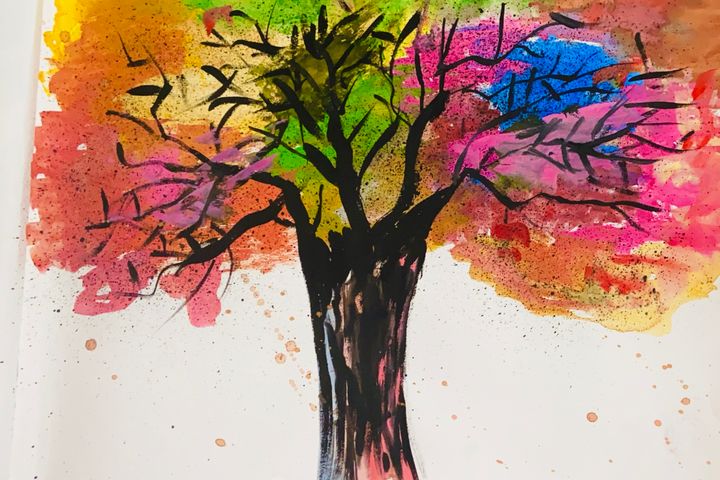
The Tree of Philosophy model uses the major branches of philosophical inquiry as its organising structure. Just as a tree branches from a single trunk, philosophy branches into distinct but interconnected domains of inquiry, each of which, Sternberg argues, captures something essential about what wisdom is and what it requires (Sternberg, 2023).
The branches the theory draws on include metaphysics, which encompasses epistemology and ontology, along with ethics, logic, aesthetics, hermeneutics, and axiology. Rather than treating these as abstract academic categories, Sternberg uses each branch to specify a dimension of wise thought and action that a comprehensive theory must address.
What Each Branch Contributes
Metaphysics, and within it epistemology, concerns the nature of knowledge itself: what can be known, how it can be known, and what the limits of knowing are. A wise person, on this account, must have a sophisticated relationship with knowledge, including an awareness of its provisional and perspectival nature. Ontology asks what exists and what is real, grounding wisdom in questions about the nature of reality that purely psychological accounts often bypass (Sternberg, 2023).
Ethics is perhaps the most familiar philosophical contribution to wisdom. Virtually every account of wisdom, psychological or otherwise, includes some notion that wise people are oriented toward the good, not just toward the effective. Sternberg’s theory makes this explicit and examines what philosophical ethics contributes to understanding the moral dimensions of wisdom (Sternberg, 2023).
Logic concerns the structure of valid reasoning. Wisdom is not merely well-intentioned; it requires the capacity to reason carefully and avoid the kinds of fallacies and distortions that lead even well-meaning people to poor conclusions.
Aesthetics might seem the most surprising branch to include in a theory of wisdom, but Sternberg argues it captures something real: the capacity for judgment, appreciation, and discernment that goes beyond rule-following. Wise responses to complex situations often cannot be derived from principles alone; they require a kind of judgment closer to aesthetic sensitivity than algorithmic reasoning (Sternberg, 2023).
Hermeneutics is the philosophy of interpretation, concerned with how meaning is made from texts, experiences, and situations. For wisdom, this is significant: wise people are skilled interpreters of complex and ambiguous situations, able to read what is actually happening beneath the surface of events.
Axiology concerns values: what is worth caring about, and how values should be ordered when they conflict. A theory of wisdom that does not grapple with values is incomplete, since much of what makes situations require wisdom is precisely that they involve genuine conflicts between things that matter (Sternberg, 2023).
How This Differs From Psychological Approaches
Most psychological theories of wisdom, including the Berlin Wisdom Paradigm, Monika Ardelt’s three-dimensional model, and the integrative model proposed by Glück and Weststrate (2022), have been built primarily from psychological research, drawing on empirical studies of how people think, feel, and behave. They tend to operationalise wisdom in ways that can be measured and tested.
Sternberg’s TOP theory takes a different route. Rather than synthesising recent empirical psychology, it synthesises millennia of philosophical inquiry, arguing that the accumulated wisdom of philosophy about wisdom itself is an underused resource (Sternberg, 2023). This is not a rejection of psychology, but a claim that psychological accounts have been working with an impoverished intellectual foundation, one that philosophical grounding can significantly enrich.
The Limitations Sternberg Acknowledges
The paper presents a sketch rather than a fully developed theory, and Sternberg is explicit about this. The TOP theory at this stage is a framework and a proposal, not a complete account with empirical operationalisation. There is also acknowledged variation across philosophical traditions in how these branches are defined and which are considered central, meaning the tree metaphor is somewhat idealized (Sternberg, 2023). Building from philosophy also raises questions about how the resulting theory can be empirically tested and applied, questions the paper raises but does not fully resolve.
Why It Matters
The psychology of wisdom has grown considerably in recent decades, but it has sometimes developed in relative isolation from the philosophical tradition that gave the concept its deepest treatment. Sternberg’s argument is that this isolation has costs: psychological models risk measuring something narrower than wisdom actually is, because they have not asked philosophy what wisdom requires at its fullest.
The TOP theory will not satisfy those who want immediately testable hypotheses or practical interventions. What it offers instead is conceptual depth and a challenge to the field: before measuring wisdom, it may be worth asking more carefully what millennia of serious philosophical thinking have concluded wisdom actually involves.
Reference
Sternberg, R. J. (2023). What is wisdom? Sketch of a TOP (Tree of Philosophy) theory. Review of General Psychology. Advance online publication. https://doi.org/10.1177/10892680231215433