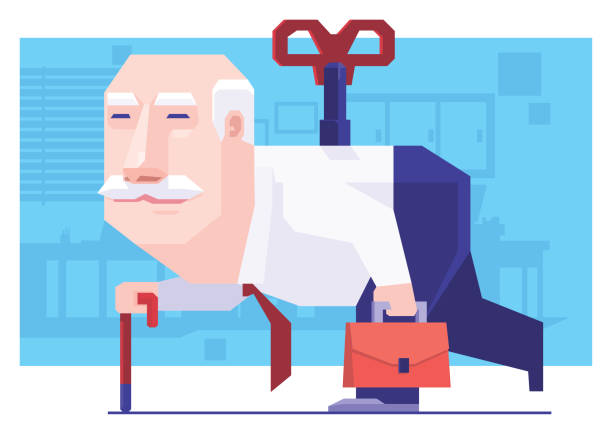
The workforce is getting older. In the United States and across much of the developed world, demographic shifts mean that a growing proportion of employees are in their fifties, sixties, and beyond. Organisations that have not thought carefully about what this means are increasingly behind the curve. Beier and colleagues (2022) provide a comprehensive primer on what psychology and organisational research actually know about age at work: how older workers perform, what supports or undermines their wellbeing, and what organisations should be doing differently.
The Theoretical Foundation
A significant part of what makes this review valuable is its grounding in lifespan development theory, frameworks that treat aging not as a simple story of decline, but as a process of ongoing change involving both losses and gains.
The most influential of these is Selection, Optimisation, and Compensation theory, which holds that as people age and their resources shift, they adapt by focusing more selectively on goals that matter most to them, optimising their effort in those areas, and finding compensatory strategies when specific capacities diminish (Beier et al., 2022). Aging, in this view, is not passive deterioration. It is active adaptation.
Socioemotional Selectivity Theory adds another dimension: as people age and their time horizons shorten, their motivational priorities shift away from information-seeking and toward emotionally meaningful goals and relationships (Beier et al., 2022). Older workers are not simply younger workers with more experience. They are often operating with a fundamentally different motivational profile.
What Changes and What Doesn’t
One of the review’s most practically important contributions is its nuanced account of how work-relevant capacities actually change with age.
Fluid cognitive abilities, the raw processing speed and working memory that underpin novel problem-solving, do show age-related decline. But crystallized abilities, accumulated knowledge, expertise, and verbal reasoning, remain stable or continue to grow well into later adulthood (Beier et al., 2022). The implication is that older workers may be less suited to roles requiring rapid adaptation to entirely new systems, but are often better equipped than younger colleagues in domains where deep knowledge and judgment are what count.
Physical capacity follows a broadly similar pattern, with declines that matter more in some roles than others. Emotional regulation, by contrast, tends to improve with age. Older workers are generally better at managing workplace stress and interpersonal conflict than their younger counterparts (Beier et al., 2022).
Motivation and Engagement
The picture on motivation is more complex than stereotypes suggest. Older workers are not, as a group, simply coasting toward retirement. What changes is the nature of what motivates them. Beier and colleagues (2022) note that older workers tend to place greater weight on work that feels meaningful, on positive relationships with colleagues, and on autonomy, and less weight on advancement, competition, and extrinsic reward.
Organisations that continue to motivate all employees through promotion ladders and performance rankings may find these approaches progressively less effective as their workforce ages, not because older workers are disengaged, but because they are engaged by different things (Beier et al., 2022).
The Role of the Workplace
A recurring theme in the review is that age-related outcomes at work are not fixed by biology. They are substantially shaped by the working environment. Job demands, social support, flexibility, and opportunities for meaningful contribution all moderate how aging plays out in practice (Beier et al., 2022).
Workplaces that offer flexible scheduling, allow workers to draw on accumulated expertise, provide autonomy, and maintain inclusive cultures tend to support both the performance and wellbeing of older employees. Those that do not, whether through ageist assumptions, rigid structures, or failure to accommodate changing needs, accelerate disengagement and exit (Beier et al., 2022).
The nonwork context matters too. Health, caregiving responsibilities, financial circumstances, and the quality of life outside work all influence how older employees engage with their jobs. Organisations that ignore this broader picture are working with an incomplete model of their workforce (Beier et al., 2022).
Age Stereotypes and Discrimination
The review also addresses the persistent problem of age-based stereotyping in organisations. Older workers are frequently assumed to be less adaptable, less technically capable, and less motivated than younger colleagues, assumptions that the evidence often does not support, and that can become self-fulfilling when they shape hiring, development, and promotion decisions (Beier et al., 2022).
Age discrimination remains common and consequential, affecting not only individual careers but organisational performance. When experienced workers are overlooked, underutilised, or pushed toward early exit on the basis of age-based assumptions rather than actual capability, organisations lose the knowledge, judgment, and stability that older employees disproportionately provide.
Why It Matters
The aging of the workforce is not a future challenge. It is a present one. Organisations that approach it with outdated assumptions about what older workers can and cannot contribute will find themselves poorly positioned: unable to attract experienced talent, unable to retain it, and unable to build the kind of multigenerational workplaces that evidence suggests are more effective than age-homogeneous ones.
Beier and colleagues (2022) make clear that the science offers a more optimistic and more nuanced picture than popular assumptions allow. Aging brings genuine changes, but also genuine strengths, and the capacity for continued contribution is far more durable than many organisations currently assume.
Reference
Beier, M. E., Kanfer, R., Kooij, D. T. A. M., & Truxillo, D. M. (2022). What’s age got to do with it? A primer and review of the workplace aging literature. Personnel Psychology, 75(4), 779–804. https://doi.org/10.1111/peps.12544