

Lessons in Education: University Years
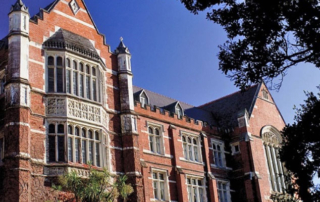
Victoria University was my home away from home between 1991 and 2000. I returned to the education system following a gap year and approached my studies with renewed vigour. I felt privileged to get into University on a provisional entry as I had not completed the seventh form. Moreover, coming

Cognitive Science Can Be Career Damaging
I have argued that the identification of a casual and biological link between personality and behaviour has ramifications for society. I have also noted how difficult it is for people to deal with any degree of determinism in the psychological sciences. As most I/O Psychologists know, cognitive ability is one

Hawthorne Effect (Being Watched May Not Effect Behaviour At All)
For those that don’t know the Economist is a fantastic newspaper. Not limited to economic news the Economist provides a synopsis across many disciplines of current topic research and findings. Often there is a section on Psychology and as a tribute to the Economist in my few short blogs, I

What Are The Areas Where Qualitative Methodologies May Be Appropriate?
What are the areas where qualitative methodologies may be appropriate? I have discussed before the limitations of the discipline as a quantitative science, an issue that has been around since the mid-1900s. When one critically reviews the discipline that is psychology, quantitative science rarely comes to mind. The great theorists

Why Do People Recommend Ipsative Tools for Selection If They Are Not Designed for That Purpose?
There are two reasons that people recommend ipsative measures for selection. The first is a misbelief that they are less resistant to faking and therefore produce more valid results. The second is that marketing is fundamentally about having a point of difference.
Computer Adaptive Testing (CAT) and Ipsative Personality Assessments
There appears to be a resurgence of ipsative testing under the veil of CAT (Computer Adaptive Testing) for personality. Clearly, there is a lot more quality research that must go on to develop a CAT for personality than the simple ipsative tests the market has seen before. In regards to
Faking and It’s Implication for the Use of Personality Tests
Faking in personality tests exists. Anyone who tries to deny this is either a liar or deluded. The question is what this means for the application of personality tests for selection. At one end of the spectrum, there are those that would argue that this completely invalidates the use of

Are Personality Tests Really That Different?
One of the myths I have long spoken about is the idea that there are great differences between various psychological tests. In essence, the argument is that if there is a science to personality, or cognitive ability, what they measure must be similar. This is fundamental to the basis for
What is Engagement and What Does it Mean for Business?
One of the words that is bandied around a lot here in England (where I am currently based) is the word ‘engagement’. Organisations want staff to be engaged but often don’t ask what this means for business. Presumably what people really want to have are more loyal employees leading to
The Great Divides in I/O Psychology: Divide 1 – Practitioner vs. Scientist
I have often discussed the role of science in our discipline and have argued that it has consistently played a back role to commercialisation and marketing. This is perhaps the greatest divide in the discipline. One of the more important journals to read in this regard is the June 2006